zPulser
Designer Laura Parrish and I worked with technology innovator Zond, Inc. to create a WordPress website that features zPulser’s new line of generators.
Generative AI has taken the world by storm, and it’s only been a few years since it’s captured the imagination of mainstream audiences. I’m been an evangelist for LLMs and image and video generation technology since 2023, when GPT 4 and DALL-E was released to the public. These tools have since equipped creatives and developers alike with the incredible power to convey our imagination into reality faster than ever before.
But I also understand the concerns you may have about intellectual property, environmental impact, and ethics. I can help you navigate the increasingly complex quagmire that is a post-genAI web.
The commercial platforms we’ve become accustomed to are only the tip of the iceberg: Codex, Claude, and Gemini for LLMs; Midjourney for generative imagery; Suno and Elevenlabs for music; and Seeddance, Kling, and Veo 3.1 for video. The list of providers grows longer every day, as do the enterprise subscription fees to engage with these services. But the real magic of genAI happens locally: as open source tools like ComfyUI become more mature and capable, we can run local models like Qwen, LTX, WAN, Flux, and Z-Image to create custom fine-tunes that allow us to train on private datasets. Together, these tools create workflows that accelerate and streamline our production processes, expanding creative possibilities within tighter budgets.
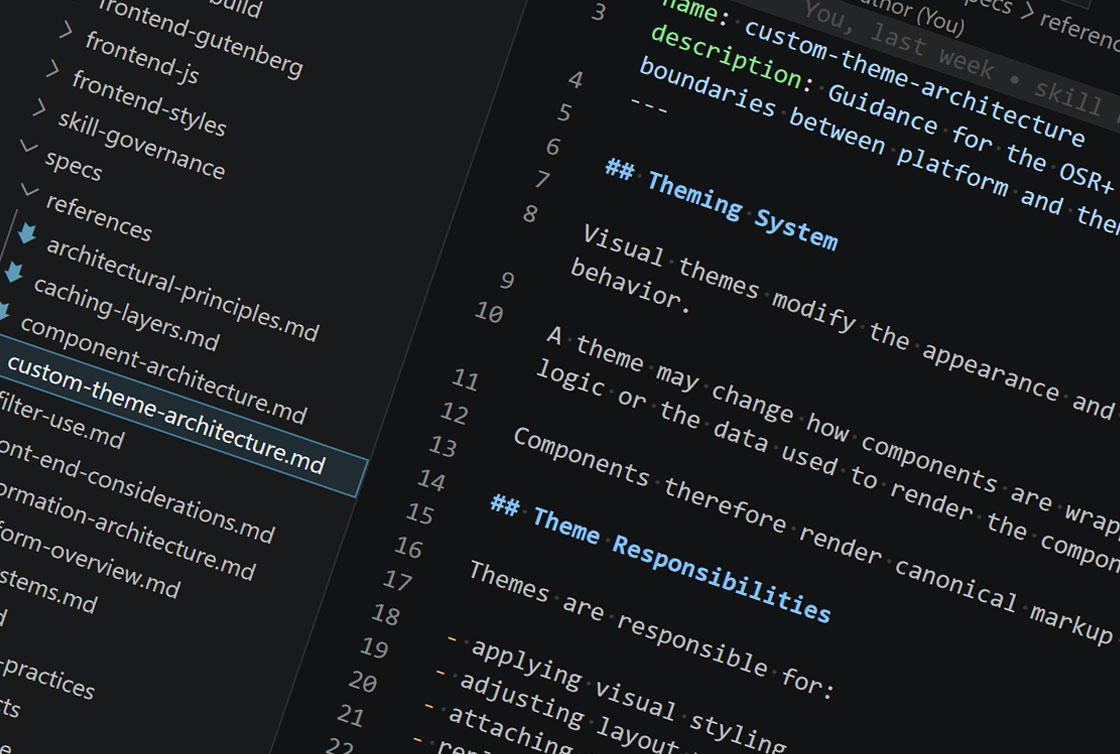
AI agents can move software projects from idea to MVP faster than ever, but there’s a major difference between vibe coding and agentic development: vibe coding treats the AI agent as both architect and developer, producing quick results without your input, which can result in a rats nest of incoherent code under the hood. That works for a proof of concept, but it becomes dangerous when the MVP touches real customers, business processes, important CRMs, payment systems, and fragile hosting environments that need long-term support. Agentic development, on the other hand, means inserting an architect into the generation process every step of the way: they define the system; break work into small, comprehensible tasks; review the output; catch bad assumptions; protect maintainability; and make sure the agent’s code aligns with the larger business processes. In this way, I use AI as a force multiplier inside a human-led development process: fast where speed helps, careful where risk matters.
You want to build a legacy of code that will withstand unpredictable change, not change with it unpredictably. Don’t just let the agent build it: let an expert direct the agent.
You can design agentic environments to be self-documenting: as I iterate on new code, the agent produces new skills (which are sets of instructions that help direct its work) based on ones I’ve already written, as well as human-readable documentation that lives as a browsable subsite within my install. This loop creates ever-increasing precision for the agent as the codebase grows, and empowers me to have full insight into the scope of development.
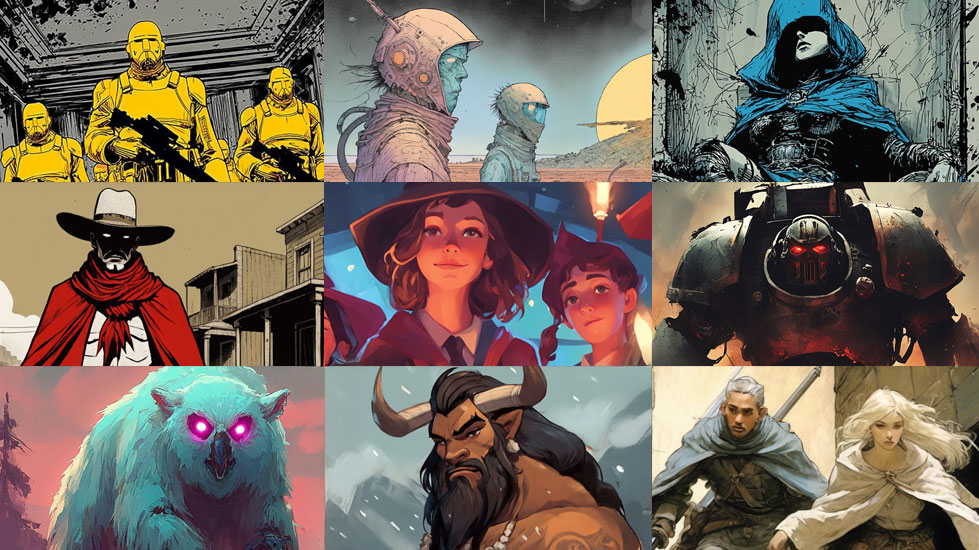
Iterative branding uses generative AI to explore and prototype visual identity. We can start with a handful of complementary ideas (whether they’re emotions we’re trying to evoke in our audience, cultural motifs we want to incorporate, or artistic styles we want to adopt) to produce a traditional moodboard that outlines our creative vision, and then use AI tooling to rapidly generate visual directions. Iterative branding through genAI allows us to quickly hone in on an “Ah ha!” moment that our visual designer can run with. All the while, the process of experimentation is driven by human judgment and intent. This approach is especially valuable for early-stage brands, creative projects in flux, or teams navigating a rebrand without the budget or risk tolerance for expensive (and therefore irreversible) bad decisions.
Rather than replacing visual designers and the process of art direction, generative AI helps us pressure test for ideas that resonate, long before the work hardens into real world assets and design guidelines.
In Advanced Old School Revival, we devised distinctive style guides for 22 product lines in two weeks, through a combination of prompt engineering and custom and open source fine-tunes. Now OSR+ can output art in minutes for any one of its products into web, video, or print formats.
Ecosystem design focuses on how generative AI can fit into a broader creative or technical environment within your business. Instead of members of your team adopting isolated tools to yield sporadic outputs across the organization, I can help you design workflows that connect only the most relevant tools to your data, and put the right people in the pilot’s seat of those tools, so that a single, coherent system can emerge that accelerates your overall business processes. This includes auditing your workflow to uncover acceleration opportunities, then selecting appropriate third party applications (or configuring local pipelines) and defining how these tools interact with existing design or engineering processes.
Ecosystem design is not about adopting more AI for the sake of it; it’s about adopting the right amount in the right places, so the system tells a coherent story about how work gets done.
Every ecosystem is different. This work benefits teams who feel overwhelmed by the pace of AI development and don’t have the enterprise budget (or the technical know-how) to take advantage of what the cutting edge has to offer.
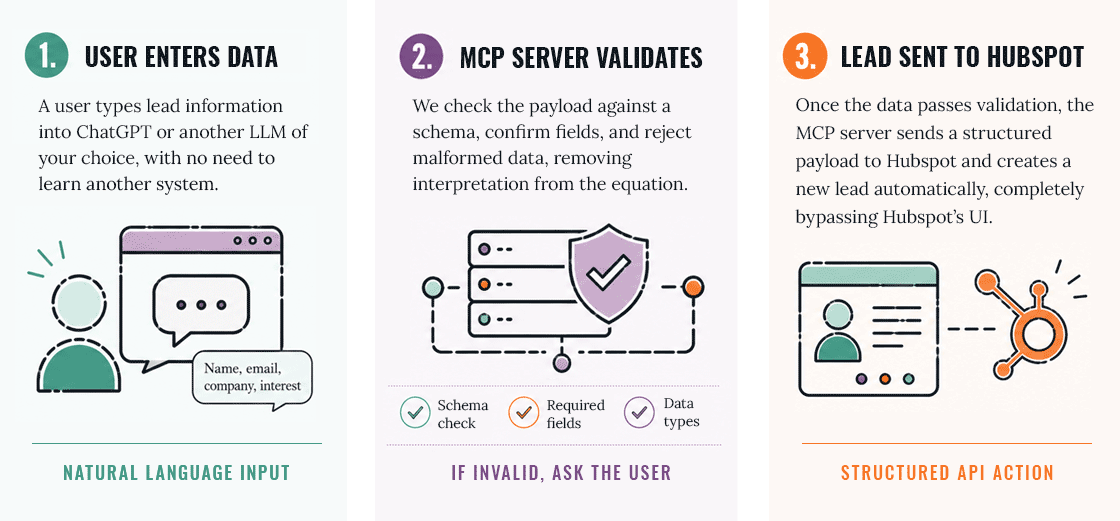
For example, suppose a pain point for your employees is entering lead data into your third party CRM. The existing process is a multi-step workflow prone to human error during data entry. We might introduce automation safely into a business by replacing the third party interface with an LLM, and installing an MCP server between the LLM and the CRM to validate the data, that way all your employees have to do is chat with the agent in plain English to get all those fields filled out and the lead into the workflow.
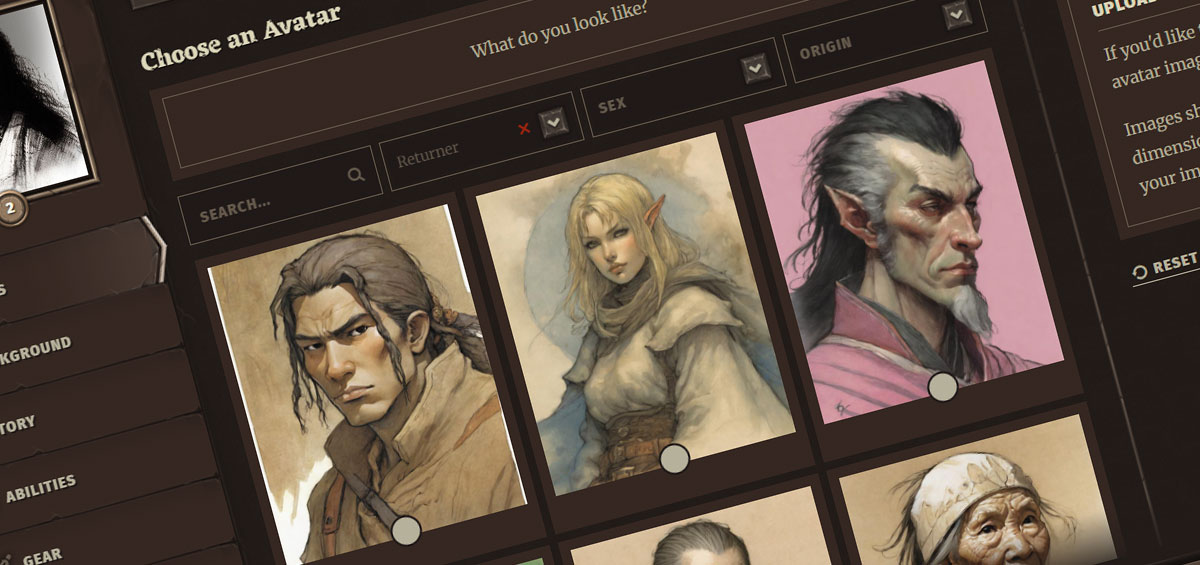
Generative AI can dramatically accelerate content production when it’s guided by clear creative intent. But the power doesn’t come with the button pushing; anyone can do that. Instead, content production at scale requires careful prompt engineering and a deep understanding of the character of generative models (some LLMs write more creatively than others; some image models are better at photorealism than illustration) to ensure outputs meet a standard of quality that won’t come across as inauthentic to audiences on the receiving end. The selection of fine tunes to bias with aesthetic preferences on the image side, or the construction of RAG pipelines to prime LLMs with the right datasets, are both part of the technical setup involved in establishing a production workflow.
There are many other considerations that go beyond that technical setup, including the question of the longevity of third party integrations in a field where the technology is constantly changing, and an ever-evolving legal landscape.
But once it’s in place, genAI goes from being a thoughtless automatic content engine to a genuine collaborator that can extend your reach.
The Character Creator in the Advanced Old School Revival (OSR+) website contains a library of some 18,000 character portraits, which were generated in a matter of hours after the appropriate pipeline was put in place as a mold for generating art in the system’s branded style.
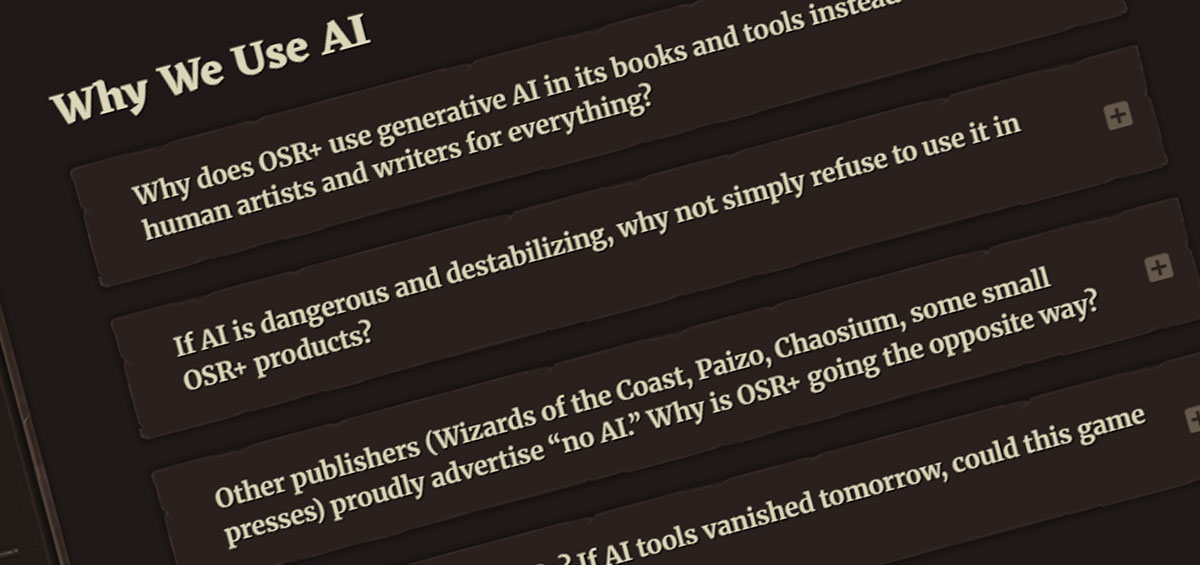
The attitudes toward genAI in the public sphere are as diverse as they are fierce. According to worldwide polls as of 2026, meta analysis shows that your average consumer is skeptical of, or at least indifferent to the technology, despite vocal evangelists and even more vocal anti-AI activists. This means there’s room to educate, and so it’s important to get ahead of the debate.
Policy development addresses the structural questions surrounding generative AI adoption head on: what should be used, how, by whom, and under what constraints. I help organizations articulate internal guidelines that balance experimentation with accountability, covering issues like data privacy, ownership, disclosure, and ethical use. These policies are tailored to the organization’s values rather than copied from generic templates.
Drafting a policy such as what I’m describing is a first step before a formal legal review and organization-wide adoption. It’s especially valuable for teams whose lack of clear guidelines can lead to inconsistent use, or worse: outright conflict. By framing policy as a living document—open to revision as tools evolve—organizations can engage generative AI thoughtfully, without freezing innovation or ignoring responsibility.
Radical transparency about genAI use in your product forces you to address all the controversial issues internally, so you aren’t blindsided by questions you never considered. This can take the form of an FAQ or a formal public statement that gets everyone in your team on the same page.
I appreciate [his] perseverance and understanding through it all … we are indeed proud of the final product.
Ken Gagne Multimedia Communications Producer — Mass Eye and Ear
A fantastic job … His work completely transformed our web presence. He’s patient, thoughtful and talented. An innovator and a tireless worker. I recommend him highly and without reservation.
Jeff Parker Co-Founder & Director — Disquiet International
I know no better WordPress developer. You’d be lucky to have him work on your site.
Chad Capellman Director of Marketing & Business Development — Balance Interactive
Daniel is extremely organized and prompt in all of his communications and deliverables… I was constantly impressed with the speed and quality of his work and the responsiveness of his communications.
Elizabeth Friend Managing Director — S3IDF
Talented, efficient, and innovative: A Bad Penny Review couldn’t be any happier with our site or with our experience. Highly recommended.
Johnny Damm Editor-in-Chief — A Bad Penny Review
Daniel is one in a million… He’s lightning fast at whatever he does while also delivering at the highest quality. He is extremely patient and always willing to help.
Anne Brown VP, Interaction Designer — Bank of America
Certain people in the world just naturally exude professionalism. No matter what, you receive more than you had ever requested and are instantly humbled by it. Daniel is that kind of person.
Fetesha Downes Communications Manager — YWCA Metro Chicago
I would trust Daniel in a heartbeat with any design or programming project… he is a pleasure to work with, incredibly skilled and creative.
Howard Stelzer Record Producer — Intransitive Recordings
Daniel’s knowledge of production techniques and sophisticated design sense made me feel totally confident. The site is edgy yet professional—I highly recommend Daniel for his ability to produce great results.
Jamie Kerry Founder — Belle Étoile Studios
Daniel consistently delivers professional and high quality work. He has a great personality and he’s respected by all.
Eric Hoffman Instructional Media Designer — Stetson University
Dan has been so responsive to both our design and support needs. We continue to get compliments on the website on a regular basis. Dan is great to work with; he is a truly unique blend of professionalism, talent, engagement, and fun.
Elizabeth Friend Managing Director — S3IDF
When it comes to specialized work, hire battle-tested experts to get the job done right. I’ll build a platform that takes care of your brand, so you can get back to building your business. Don’t hesitate to get in touch. A consultation is free, and we can determine over a quick phone call if I’m a good fit for your project.
Designer Laura Parrish and I worked with technology innovator Zond, Inc. to create a WordPress website that features zPulser’s new line of generators.
Now cross-product blog owners on Join.me can work with the same account across multiple products, all within the same easy-to-use platform.
Designer Kit Casey and I worked with Karen Pelaez and Stephanie Vyce from the Harvard University Press to design a celebration website for the Press’ 100-year anniversary.